
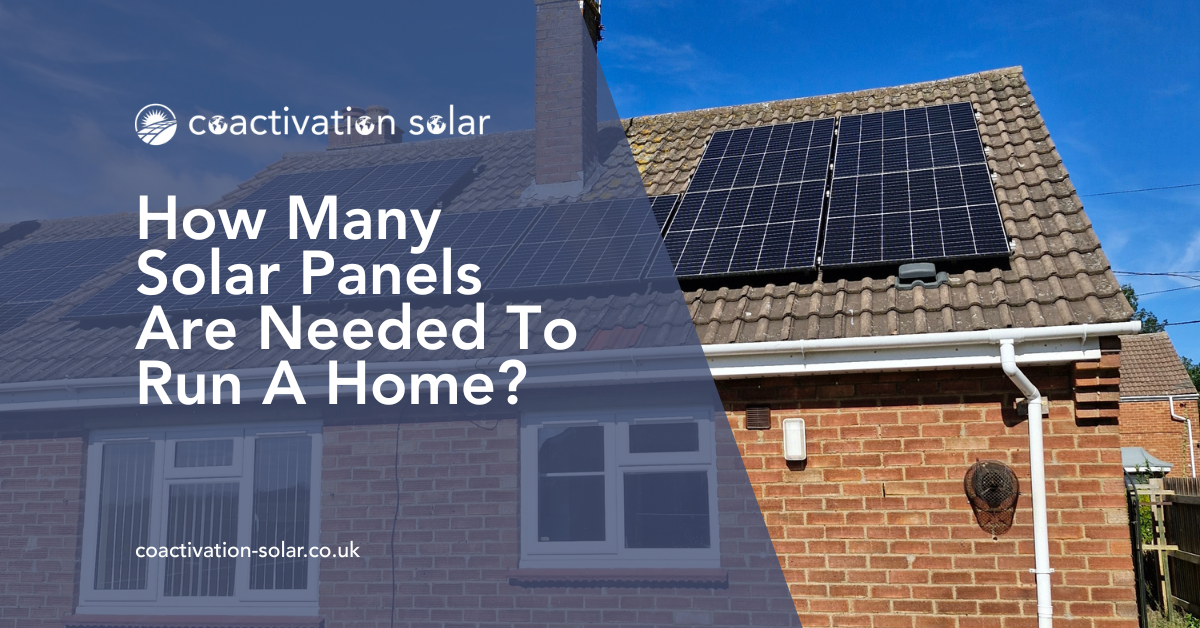
If you’ve been wondering how many solar panels are needed to run a home, the answer depends on your household’s electricity usage, available roof space, and the type of panels you choose. For most UK homes, the right solar panel system can lower electricity bills, reduce reliance on the National Grid, and even earn you money through the Smart Export Guarantee if you generate excess energy. The average home in the UK typically has standard energy needs and roof space, which influences the size and number of solar panels required.
The average size of a solar panel system for a typical UK roof is designed to fit the available space and meet the energy needs of the household. A typical three-bedroom house in the UK might need 8–12 panels to meet most of its energy needs, while a five bedroom house may require 20 or more. The system size you choose will also depend on whether you add a solar battery to store unused electricity.
While online tools can give rough estimates; these are only approximate calculations and should be used as a general guideline, they can’t account for roof orientation, shading, or the physical layout of your property. To determine how much electricity your home uses annually, review your energy bills and use this information to help size your solar panel system. A professional solar panel installers, such as our team here at Coactivation Solar, can provide accurate figures and design a system tailored to your home.
Installing Solar Panels
Installing solar panels starts with careful planning to make sure the system matches your energy requirements and your property’s roof layout. Key factors include:
- Roof space and orientation – South-facing roofs with minimal shading usually deliver the highest energy output. East- or west-facing roofs can still work well but may require more panels to achieve the same results. It’s important to consider how much space is available on your roof, as a typical installation may require 15–25 square meters depending on your energy needs.
- Roof condition – Your roof must be strong enough to support the weight of the panels and mounting system.
- Local planning rules – Most residential solar panel systems fall under permitted development, but listed buildings or homes in conservation areas may require prior approval.
- The type of panels you choose and the solar panel dimensions will affect how many panels can fit and how much energy your system can generate.
- Sunlight hours – Regional variations matter. For example, the East Midlands receives fewer sunlight hours in winter than in summer, which affects seasonal generation. Sun hours can vary significantly across the UK, and different sun hours in each region directly impact solar energy production and the efficiency of your installation.
- Grid connection – Larger systems may require additional permissions or grid upgrades.
Understanding these factors in advance helps ensure your system meets local requirements, performs efficiently, and is built to last. In off-grid or high-demand scenarios, it is important to consider extra power capacity to cover seasonal variation, backup needs, and additional energy consumption.
The cost of installing solar panels varies depending on system size, panel quality, and installation complexity. Adding battery storage, such as a Tesla Powerwall, increases the upfront cost but allows you to store energy for use in the evenings or during low-sunlight periods. When designing your solar system, consider both the number of panels and battery storage to ensure the complete setup meets your household’s energy needs.
With the right design, solar panels can reduce electricity bills and even create an income by exporting surplus energy back to the grid through the Smart Export Guarantee.
Working Out Annual Electricity Usage
Your annual electricity usage is the starting point for calculating how many panels you need. This figure, usually shown on your energy bills in kilowatt hours (kWh), reflects the total energy used over the year and helps determine your household’s electricity needs. For example, to meet an average annual electricity consumption of 2,700 kWh, a household would require a solar system size of about 4 to 5 kW.
High-energy appliances such as tumble dryers, electric ovens, and electric vehicle chargers increase your energy requirements. Homes with electric heating or air conditioning may also need a larger solar panel system.
Any decent installer will assess your past usage, daily routines, and any planned changes, such as adding a heat pump or EV charger, to size your system correctly. They can help answer questions like “how many panels do I need” to ensure your system matches your actual usage. This ensures it’s big enough to meet your needs without paying for unnecessary capacity.
Assessing Roof Suitability
Before deciding how many solar panels you need, it’s essential to assess whether your roof is suitable for a solar panel system. Several factors influence this, starting with roof size, enough space is needed to fit the number of panels required to meet your energy needs. A south facing roof is ideal in the UK, as it captures the maximum sunlight hours and boosts energy output. However, even if your roof faces east or west, you can still benefit from solar panels, though you may need more panels to achieve the same results.
Physical limitations such as chimneys, skylights, or shading from nearby trees can impact how many solar panels can be installed and how much energy they will generate. The roof’s structural integrity is also crucial, as it must support the weight of the panels and mounting equipment. Your solar installer will evaluate all these factors, including the roof’s angle and any potential obstacles, to recommend the optimal solar panel system for your home. By thoroughly assessing your roof’s suitability, you can ensure your investment in solar panels delivers the best possible energy output.
Understanding Solar Panel Options
When considering how many solar panels you need, understanding the different types of residential solar panels is key. Most panels installed on UK homes today range from 350W to 450W per panel, with higher-output models delivering more energy from the same amount of roof space. Polycrystalline panels are a popular choice for many solar installations, offering a solid balance between cost and performance. For those seeking maximum efficiency, monocrystalline panels are the top performers, with efficiencies reaching up to 24%, though they tend to be more expensive.
Thin-film panels are another option, valued for their lightweight and flexible design, making them suitable for roofs with structural concerns or limited load-bearing capacity. When selecting panels, consider not just the upfront cost, but also the expected energy output, durability, and warranty terms. The right choice will depend on your energy requirements, available roof space, and budget. By understanding your options, you can select the solar panels that best match your needs and maximize the benefits of your solar panel system.
Choosing the Right Solar Panels and System Size
The right system balances your energy needs, available roof space, and budget. The number of solar panels required depends on your household’s electricity usage, roof size, and system goals. Efficiency plays a key role:
- High-efficiency panels can generate more power from fewer panels, ideal where space is limited.
- Standard efficiency panels may require more space but can be a more cost-effective option.
For most three-bedroom houses, a system of 8–12 panels (around 3–4 kW) is typical. Larger homes or households with higher energy consumption may need a bigger installation. A large solar panel system, such as 12kW or more with 16 or more panels, is suitable for properties with substantial energy needs or specific installation requirements. For a smaller home, such as a one-bedroom house, six solar panels may be sufficient to meet typical energy demands.
Calculating the Maximum Amount of Solar Energy
The maximum solar energy your home can generate depends on:
- Roof size and orientation
- Panel efficiency and power rating
- Average annual sunlight hours
The maximum number of solar panels you can install is determined by your available roof space, property layout, and any planning or technical restrictions.
More efficient panels generate more power from the same roof space, which is particularly useful for smaller roofs. A larger solar panel system may be needed if you want to cover high electricity usage or export significant excess energy to the grid, so calculating the number of solar panels needed is essential to meet your energy goals.
Your installer will carry out a property survey, and will calculate your system’s potential generation and give you a realistic picture of both savings and earnings. They will also consider the legal limit for system size or capacity based on local regulations and grid connection rules.
Maximising Solar Panel Efficiency
Getting the most from your solar panel system means focusing on efficiency. High-quality solar panels with a higher power rating can generate more energy per panel, which is especially valuable if you have limited roof space. Several factors influence the efficiency of your system, including the installation angle, the quality of the panels, and ongoing maintenance.
To maximize energy output, it’s important to keep panels clean and free from debris, as dirt and shading can reduce performance. The installation angle should be optimized for your location to capture the most sunlight throughout the year. Working with a fully accredited and experienced solar panel installer ensures your system is designed and installed for peak efficiency, taking into account all the factors that influence performance. Regular maintenance and monitoring will help you maintain high energy output and get the best return on your investment.
Finding the Best Prices for Solar Panels
To get the best value, compare quotes from multiple trusted installers. When you request non binding quotes, you can receive free, no-obligation estimates from professionals, allowing you to easily compare prices and options without any risk. Look beyond the headline price and check what’s included, such as:
- Warranties and aftercare
- Scaffolding and electrical upgrades
- Inverter and battery options
Online review sites and comparison tools can help you shortlist reputable installers, although word of mouth and real human conversations with installers are always the best route. Many providers offer a quick and easy service for obtaining quotes, making the process convenient and efficient.
Evaluating the Benefits of Solar Energy
Installing solar panels offers a range of benefits that go beyond just reducing your energy bills. By generating your own electricity, you can lower your reliance on the national grid and protect yourself from rising energy costs. The Smart Export Guarantee allows you to earn money by exporting excess energy back to the grid, turning your solar panel system into a potential income source.
Solar panels may also increase your property’s value and appeal to environmentally conscious buyers. While installation costs are an important consideration, the long-term savings and potential earnings often outweigh the initial investment. By evaluating all the factors, such as your energy requirements, available roof space, and the potential for excess energy generation, you can make an informed decision about installing solar panels. Consulting with a trusted solar panel installer will help you understand the full range of benefits and ensure your system is tailored to your needs, making solar energy a smart and sustainable choice for your home.
Conclusion
Working out how many solar panels you need is about matching your energy usage with your available space, budget, and performance goals. By considering annual electricity consumption, roof space, panel efficiency, and whether you want to store or export excess energy, you can choose a system that delivers both savings and reliability. It’s important not to install too many solar panels beyond what you need, as overproduction may not be cost-effective.
For East Midlands homeowners, the quickest way to get accurate figures and a clear installation plan is to speak to a member of our team. The UK government also supports solar installations through certifications and regulatory guidance, helping ensure your system meets all necessary standards.
Contact us today for your free, no-obligation quote and start your journey to lower energy bills and greater energy independence.

